I have written major chord notes like 1 3 5 , for example for C chord it is C, E , G...now we can note how these notes are on different strings.
C shape chord = C E G
x-----------|----3-----1|----2-----3|----------5|----1-----1|----------3A shape chords = A C# E
x-----------|---------A-1|----2----E-5|----2----A-1|----2----C#3|---------E-5G shape chord = G B D|----3------1|----2------3|-----------5|-----------1|-----------3|----3------5 E shape chord = E G#/Ab B |----------1|----2-----5|----2-----1|----1-----3|----------5|----------1
D shape = D F# A|----------x|----------x
|----------1 |----2-----5|----3-----1|----2-----3So we can summarize it as :
Shape Note order on string
C 1 3 5 1 3
A 1 5 1 3 5
G 1 3 5 1 5 1
E 1 5 1 3 5 1
D 1 5 1 3
Note that A,E,D resemble in order and also C, G resemble a bit.
Now we can make various barre chords according to these shapes. See making barre chords.
CAGED system
Start by locating the Root Notes of each of these familiar chords:
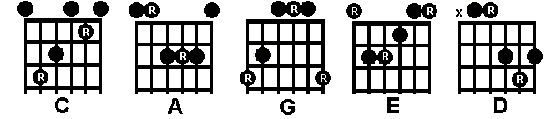
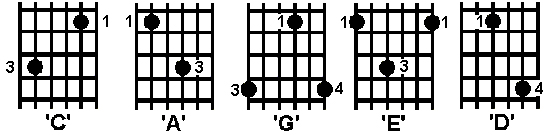
Each set of root notes forms a unique movable Octave Pattern :
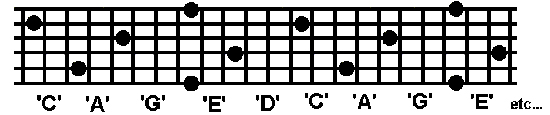
By laying these five patterns out so that they overlap each other in the order that spells the word 'CAGED' we are able to chart every occurrence of any given note on the fretboard:

No comments:
Post a Comment